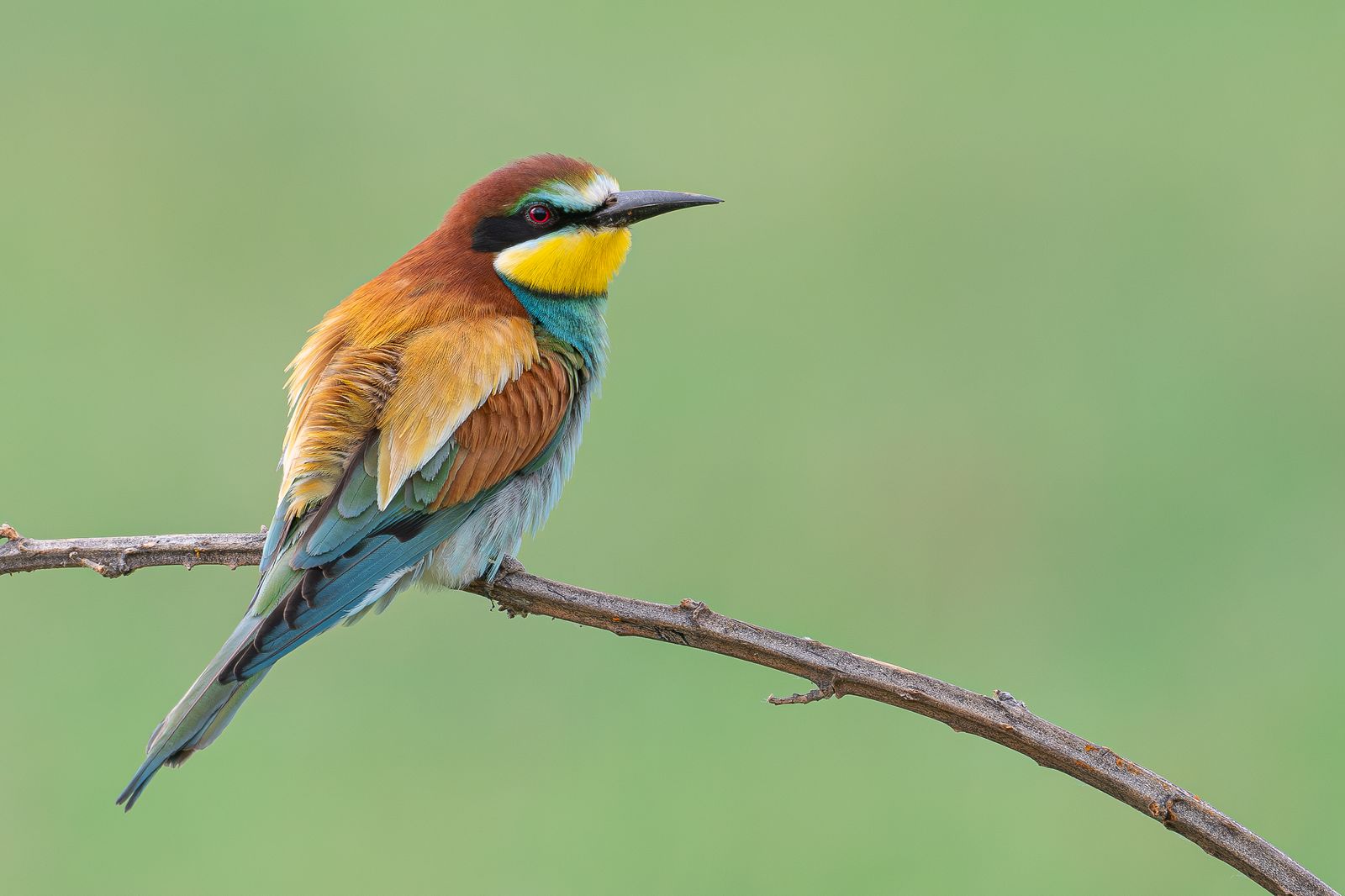

European Bee-eater · © Birding in Greece
Birds of Greece
Discover the Birds of Greece & its Birding Destinations
Explore our complete list of the Birds of Greece, featuring species status, the best time of year to see them and where to find them. Discover our Rarity Codes, explore the country’s diverse regions and birding hotspots, and find inspiration for your next birding adventure in one of Europe’s most rewarding birding destinations.
Full Greek Bird List →Preview
The Birds of Greece Checklist
| Species | Status | Rarity Code | Category | Comments |
|---|---|---|---|---|
| Alpine ChoughPyrrhocorax graculus | Resident | 2 | Uncommon species | |
| Audouin's GullIchthyaetus audouinii | Resident | 2 | Uncommon species | |
| Bearded VultureGypaetus barbatus | Resident | 3 | Scarce species | |
| Black StorkCiconia nigra | Summer visitor | 2 | Uncommon species | |
| Black-headed BuntingEmberiza melanocephala | Summer visitor | 1 | Common species | |
| Cinereous BuntingEmberiza cineracea | Summer visitor | 2 | Uncommon species | |
| Cinereous VultureAegypius monachus | Resident | 3 | Scarce species | |
| Collared PratincoleGlareola pratincola | Summer visitor | 2 | Uncommon species | |
| Dalmatian PelicanPelecanus crispus | Resident | 2 | Uncommon species | |
| Demoiselle CraneGrus virgo | Vagrant | 4 | Rare species |
Birding Regions
Currently under development
Rarity alerts
Our Rarity Codes
The Rarity Codes presented here are an unofficial classification of bird species in Greece, developed for the Rarity Alert section of Birding in Greece. Inspired by the American Birding Association (ABA) system, these codes are based on our personal assessment and aim to help birders and visitors understand the relative rarity of a sighting - therefore not representing an official classification by the Hellenic Rarities Committee. Our Rarity Alert includes all species of Codes 4 and 5, non-resident Code 3 species, as well as selected Code 2 regional rarities.
- 1
Code 1: Common species
Resident species and/or migratory and winter visitors, widespread and frequently present throughout most of mainland and island Greece (including common seabirds).
- 2
Code 2: Uncommon species
Visitors and/or resident species found in Greece consistently in small numbers and/or regularly occurring only regionally (e.g., only in Northern Greece). Note that some species in this category may be harder to observe (due to their habits or distribution) than some in Category 3.
- 3
Code 3: Scarce species
Annual visitors with only a few records in Greece each year or resident species with an extremely restricted range (e.g. Capercaillie, Bearded Vulture, Pheasant). This includes established winter visitors with small or very local populations (e.g. Lesser White-fronted Goose, White-headed Duck), as well as species that were until recently included in the Committee’s “Rare Birds List” (e.g., Velvet Scoter, Steppe Eagle).
- 4
Code 4: Rare species
Species that occur irregularly and not annually in Greece, with at least 5 documented records during the last 30 years, showing an established but irregular pattern of occurrence. This category includes occasional (but not annual) winter visitors (e.g. Common Eider, Pallas’s Gull), as well as rare species that only very recently established a known wintering site (e.g., Finsch’s Wheatear, Pine Bunting). The only exception concerns migratory vagrants with fewer than 5 recent records in Greece but which show a clear and recurring pattern of occurrence in Europe and the Balkans (e.g. Olive-backed Pipit).
- 5
Code 5: Accidental species
Species with fewer than 5 documented records in Greece during the last 30 years, with no established pattern of occurrence in Greece or neighboring regions.
- 6
Code 6: Extinct species
Species listed in Greece’s checklist, but which have either become extinct (Slender-billed Curlew) or, due to their distribution, are unlikely to be observed again in the country (Black Francolin). This includes introduced species that once maintained viable populations but are now observed only as escapees (Red-legged Partridge).