
Cyprus Wheatear on Rhodes: a Potential First for Greece
9 Apr 2026 · Rhodes, Southern Aegean
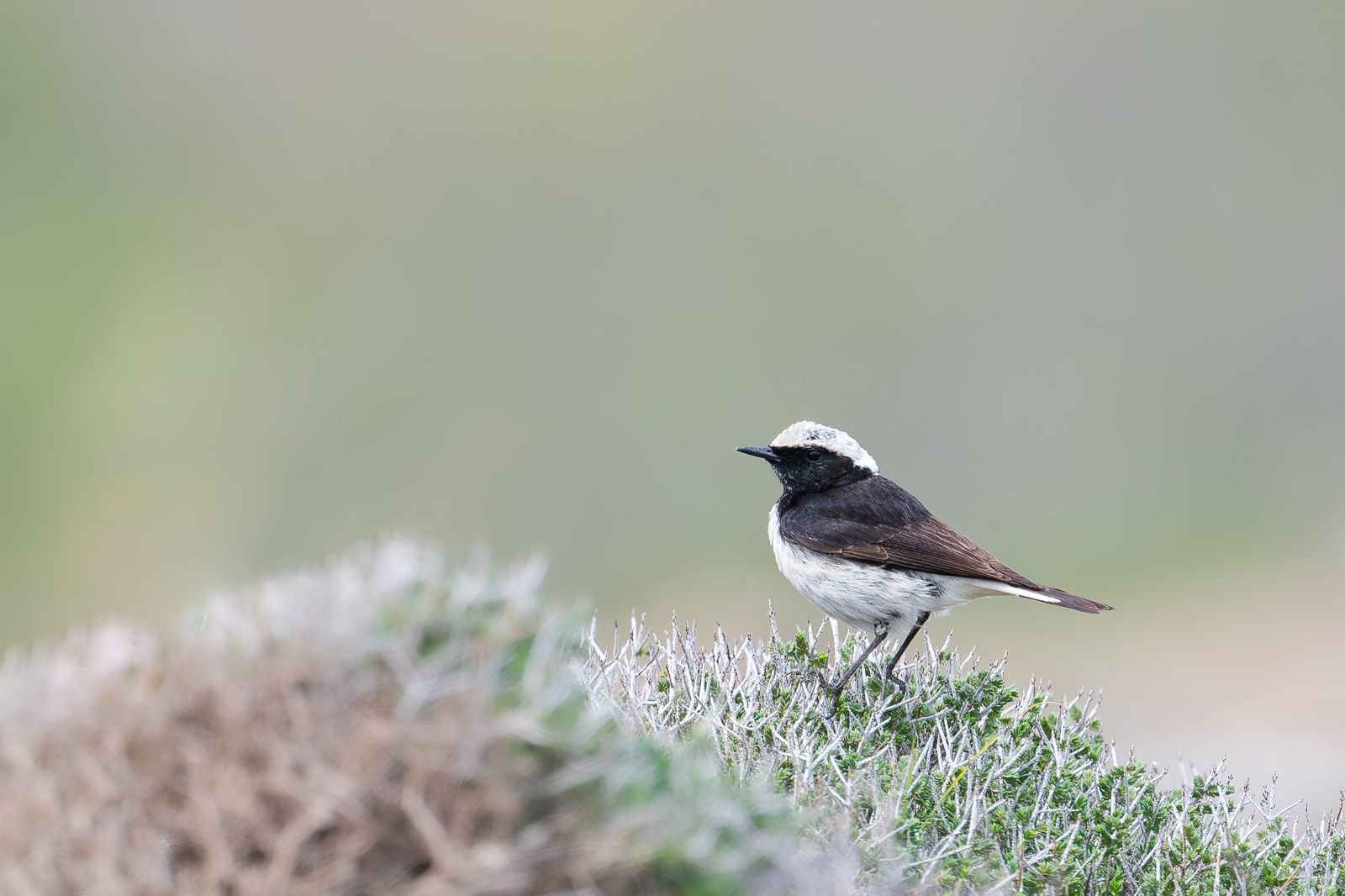
An exciting discovery was made by members of Birding in Greece on the 2nd of April 2026, when an aged adult male Cyprus Wheatear (Oenanthe cypriaca) was observed at Massari Beach, on the island of Rhodes.
Anticipating the possibility of interesting arrivals following the strong south-easterly winds forecast for the region – and with this particular species in mind – our team decided to make a targeted birding trip to Rhodes during those days. The decision proved particularly rewarding, resulting in this remarkable discovery.
The bird was found by Thanasis Tsafonis (eBird checklist), feeding near a fenced fig grove, having presumably arrived on the island during the preceding period of strong winds.
The identification presented an interesting challenge, as adult male Cyprus and Pied Wheatears (Oenanthe pleschanka) can show considerable morphological similarities during spring. However, careful examination of the bird’s plumage revealed a combination of features supporting its identification as Cyprus Wheatear.
According to Shirihai & Svensson (2018), adult male Cyprus Wheatears generally exhibit a darker back and a broader black tail band than Pied Wheatears, although some overlap between the two species is known. Additional and particularly important identification characters, as described by Flint (1995), include a shorter primary projection and a less extensive white rump patch in Cyprus Wheatear.
The latter feature is particularly useful in flight: in Pied Wheatear, the white rump patch typically extends upwards to the tip or base of the shortest tertial, whereas in Cyprus Wheatear it generally ends around the tip of the shortest or central tertial. The combination of these diagnostic features was clearly documented in our photographs, providing strong support for the identification.
Cyprus Wheatear is a scarce spring visitor to southern Turkey, with occasional individuals overshooting further west, including records from the western Antalya region, such as Patara. Nevertheless, its occurrence on Rhodes represents a remarkable westward arrival.
In the days following the initial observation, the bird was successfully recorded singing by twitching birder S. Psaradelis. The song provided further confirmation of its identity as a Cyprus Wheatear, resolving any remaining identification doubts.
If accepted by the Hellenic Rarities Committee (HRC), this observation will constitute the first record of Cyprus Wheatear for Greece.
References
- Shirihai, H. & Svensson, L. (2018). Handbook of Western Palearctic Birds, Volume I.
- Flint, P. (1995). Separation of Cyprus Pied Wheatear from Pied Wheatear.