
AviList & eBird/Clements 2026: What's New in Bird Taxonomy and What Does It Mean for Birders in Greece?
12 Nov 2026
The publication of AviList v2026 on 20 October 2026 marks an important milestone in the development of a unified global bird checklist. It represents the first major revision of AviList since its original launch in June 2025, following an intermediate minor update, v2025b, published in June 2026.
AviList is a collaborative global checklist developed through the participation of taxonomic experts and representatives associated with major international and regional ornithological organisations. Its development has involved the Cornell Lab of Ornithology, BirdLife International, the International Ornithologists’ Union (IOC), regional taxonomic committees and other specialists from around the world.
Its primary objective is to establish a common taxonomic framework for birds, providing a consistent reference for ornithological research, biodiversity databases, conservation initiatives and birdwatching.
The 2026 revision represents an important step towards this goal. It introduces numerous taxonomic and nomenclatural changes, substantially improves geographical information and brings AviList into closer alignment with other major global bird checklists. Particularly noteworthy is the increasing compatibility between AviList and the eBird/Clements Checklist, two of the most widely used taxonomic references among ornithologists and birdwatchers.
The eBird/Clements Checklist v2026 followed on 2 November 2026, further strengthening the convergence between the two systems.
The main developments in AviList v2026
The 2026 revision introduces several important developments, extending beyond the recognition of new species and changes in scientific names.
Some of the most significant include:
- Taxonomic alignment: AviList and eBird/Clements have achieved complete alignment at the levels of orders, families and genera.
- Species-level alignment: The two checklists are now approximately 97.7% aligned at species level, although some differences remain.
- Taxonomic revisions: New species splits, lumps and changes in classification have been incorporated following assessments by the AviList Taxonomic Committee and regional advisory groups.
- Improved geographical information: Distribution information has been substantially revised, including the introduction of species-level range statements for all polytypic species.
- New English-name framework: English names for orders and families have been introduced, alongside the work of a dedicated English Names Committee.
- Improved interoperability: Links between AviList and major biodiversity and ornithological resources, including eBird/Clements, BirdLife International and Birds of the World, have been updated.
What’s new for Greece and the Mediterranean?
Although many of the changes introduced in the 2026 revision concern species from other parts of the world, several are particularly interesting for European and Greek birdwatchers. These include newly recognised species, changes in generic classification and revisions that may influence the interpretation of historical records and the identification of potential future vagrants.
1. Splits & New species
Mediterranean Flycatcher (Muscicapa tyrrhenica)
Previously included within the Spotted Flycatcher (Muscicapa striata) complex, the Mediterranean Flycatcher is now recognised as a separate species. Its distribution includes the Balearic Islands, Corsica and Sardinia, as well as adjacent parts of mainland Italy.
The two species are similar but differ in several plumage and structural features. Mediterranean Flycatcher generally has shorter, more rounded wings and a shorter primary projection, giving it a relatively longer-tailed appearance. Its upperparts tend to be warmer brown, while the underparts are less heavily streaked: the breast markings are usually weaker, more diffuse and sometimes almost absent, rather than the more distinct streaking typical of M. striata. Differences in song provide another important clue, with M. tyrrhenica including very high-frequency, almost electric-sounding notes that are absent from the song of M. striata. Nevertheless, identification can be challenging, particularly in the field, and should be based on a combination of characters rather than a single feature (Baudrin 2024; Viganò & Corso 2015; Viganò et al. 2019).
For birders in Greece, the recognition of the Mediterranean Flycatcher raises an interesting possibility: the species could be a potential new vagrant to look out for during migration, particularly in the westernmost parts of the country. Revisiting well-documented historical Muscicapa records from western Greece could therefore be especially worthwhile.
Maghreb Wheatear (Oenanthe halophila)
Another interesting development is the recognition of Maghreb Wheatear as a separate species from Mourning Wheatear (Oenanthe lugens).
Maghreb Wheatear is distributed in North Africa, where it was previously treated as part of the Mourning Wheatear complex. Its recognition as a separate species reflects differences in morphology, ecology and other characteristics.
Neither Maghreb Wheatear nor Mourning Wheatear has yet been recorded in Greece. However, the revised taxonomy is particularly interesting, as both taxa could be considered potential future vagrants, adding two distinct species to the list of possibilities for the country’s birding community.
Canary Islands Robin (Erithacus superbus)
The 2026 revision also brings an interesting change to the taxonomy of the European Robin (Erithacus rubecula).
The Canary Islands populations are now recognised as a separate species, the Canary Islands Robin (Erithacus superbus). This treatment includes the populations of Tenerife and Gran Canaria, rather than recognising the two islands’ populations as separate species.
Their recognition reflects the evolutionary differentiation of these isolated island populations and provides another example of how geographical isolation can contribute to speciation.
This raises an interesting question for Greece, particularly in relation to Crete. As one of the largest and most isolated islands in the Mediterranean, Crete supports several bird populations with distinctive geographical distributions and evolutionary histories. Some, such as the Short-toed Treecreeper (Certhia brachydactyla), the Great Tit (Parus major) and the Eurasian Wren (Nannus troglodytes), have already received recent attention in modern genomic research, maintaining genetically isolated populations on the island (Moysi et al., 2023).
Future research combining whole-genome analyses, detailed morphological comparisons and bioacoustic studies could provide a better understanding of these populations and potentially lead to the recognition of additional subspecies or, where sufficient evidence supports it, entirely new species.
2. Changes in generic classification
Some of the most noticeable changes in AviList v2026 do not involve the recognition of new species, but rather the reassignment of familiar birds to different genera.
Eurasian Wren (Nannus troglodytes)
The Eurasian Wren is now classified as Nannus troglodytes, rather than Troglodytes troglodytes. The genus Nannus, originally established by Billberg in 1828, is now being used to accommodate three species: Eurasian Wren (Nannus troglodytes), Winter Wren (Nannus hiemalis) and Pacific Wren (Nannus pacificus).
This change reflects a better understanding of the evolutionary relationships between these birds and the other species traditionally placed in Troglodytes. Molecular research has demonstrated that the Eurasian and North American wrens represent distinct evolutionary lineages, supporting their classification in separate genera.
The familiar Eurasian Wren remains the same species, with no change to its English name, species status or distribution. Nevertheless, birdwatchers will encounter the new genus name in updated checklists, field guides and online databases.
The division of the genus Emberiza
Perhaps the most significant generic reclassification for birders in Europe and Greece is the division of the traditionally large genus Emberiza into four genera: Emberiza, Schoeniclus, Melophus and Fringillaria.
The genus Emberiza has historically included a diverse group of buntings distributed throughout Europe, Asia and Africa. However, molecular phylogenetic research has revealed several distinct evolutionary lineages within this traditional grouping, supporting a revised generic classification.
The change was introduced following AviList Taxonomic Proposal #71, promoted by the Palearctic Regional Advisory Group in consultation with the Africa Regional Advisory Group. The proposal was assessed by the AviList Taxonomic Committee and incorporated into the 2026 classification. The revised generic arrangement was also adopted in eBird/Clements v2026.
The four genera are as follows:
1. Emberiza
The genus Emberiza retains several familiar European species and some of the most common buntings in Greece, including the Yellowhammer (Emberiza citrinella), the Cirl Bunting (Emberiza cirlus), the Ortolan Bunting (Emberiza hortulana), the Cretzschmar’s Bunting (Emberiza caesia) and the Corn Bunting (Emberiza calandra).
2. Schoeniclus
The reinstated genus Schoeniclus includes a number of species previously classified within Emberiza. Among them, four (4) can be found on the National Greek Birds List: the Reed Bunting (Schoeniclus schoeniclus), the Little Bunting (Schoeniclus pusillus), the Rustic Bunting (Schoeniclus rusticus) and the Yellow-breasted Bunting (Schoeniclus aureolus). Additionally, some European vagrants such as the Black-faced Bunting (Schoeniclus spodocephalus) and the Pallas’s Bunting (Schoeniclus pallasi) are now also included within the new genus.
3. Melophus
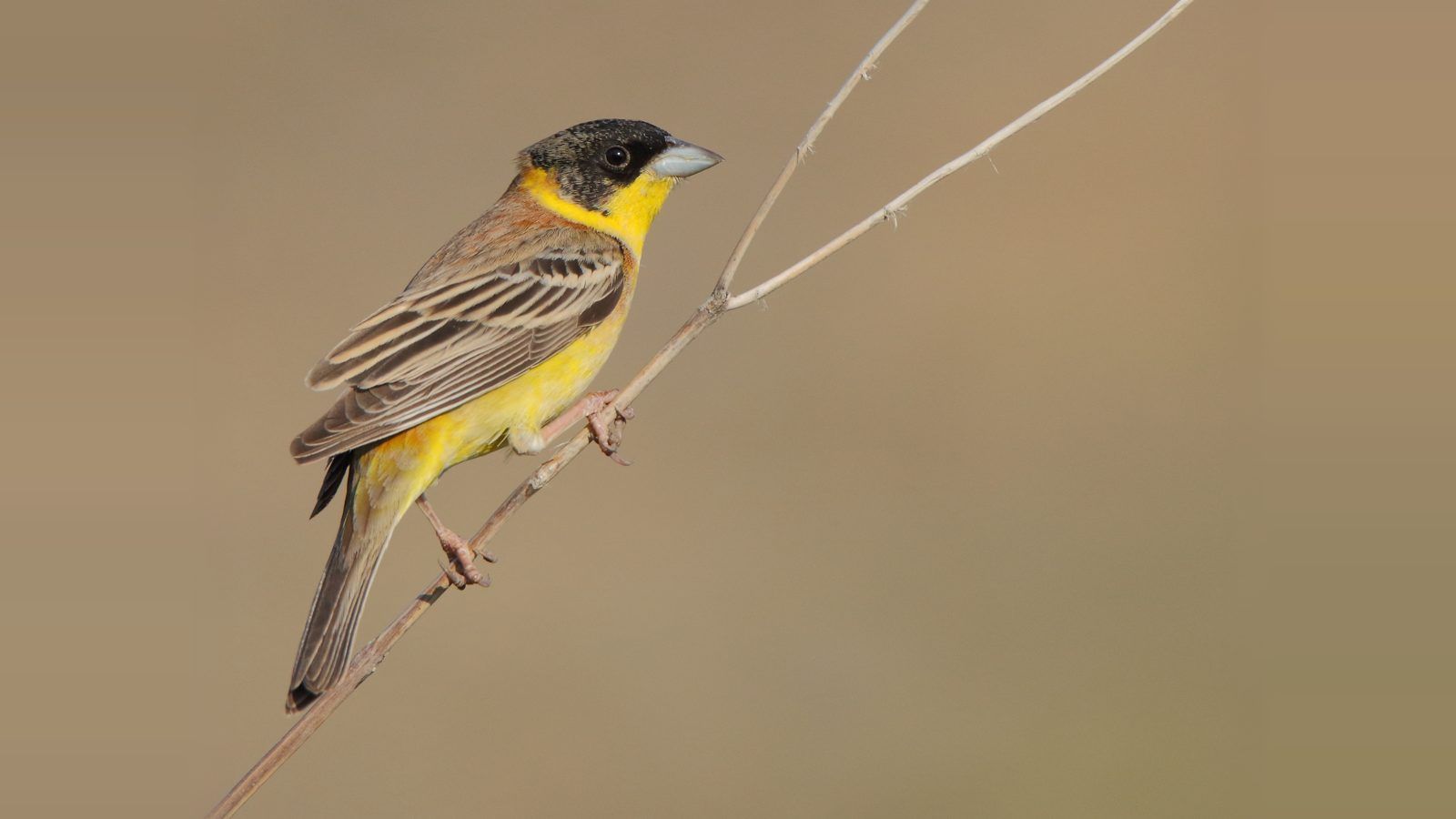
The genus Melophus includes two Asian species: the Black-headed Bunting (Melophus melanocephalus) – a familiar summer visitor and breeding species in Greece – and the Red-headed Bunting (Melophus bruniceps).
4. Fringillaria
The fourth genus, Fringillaria, comprises 11 predominantly African species, including the House Bunting (Fringillaria sahari) and the Striolated Bunting (Fringillaria striolata), none of which are (yet) found in the Greek List.
Other taxonomic changes of interest to birders in Europe
Beyond the Mediterranean species splits and the generic reclassifications discussed above, AviList v2026 includes numerous other changes affecting birds from different parts of the world.
One particularly interesting example is the lumping of the Little Swift (Apus affinis) and the House Swift (Apus nipalensis), which are now treated as a single species, Little Swift (Apus affinis).
More broadly, the revision includes numerous splits, lumps and changes in scientific nomenclature across several bird families. Some are relevant primarily to birders travelling outside Europe, while others may influence the interpretation of historical records and observations in regions where different taxonomic treatments have previously been followed.
The full list of changes is available in the AviList v2026 checklist and its accompanying decision summaries, while the eBird/Clements v2026 spreadsheet provides detailed documentation of the corresponding revisions.
References
- AviList Core Team. (2026). AviList: The Global Avian Checklist, v2026.
- Baudrin, G. (2024). Génomique et écologie de la spéciation d’un complexe d’espèces migratrices : les gobemouches gris et tyrrhénien. PhD thesis, Muséum National d’Histoire Naturelle, Paris.
- Billberg, G. J. (1828). Synopsis faunae Scandinaviae. Tom. 1, Pars 2: Aves, p. 57. Holmiae [Stockholm]: Ex officina typographica Caroli Deleen.
- Clements, J. F., Rasmussen, P. C., Schulenberg, T. S., Iliff, M. J., Gerbracht, J. A., Lepage, D., Spencer, A., Billerman, S. M., Sullivan, B. L., Smith, M. and Wood, C. L. (2026). The eBird/Clements Checklist of Birds of the World: v2026.
- Clements et al. (2026). Updates and Corrections – October 2026. Cornell Lab of Ornithology.
- Hellenic Rarities Committee (2026). List of the Birds of Greece.
- Moysi, M., Ogolowa, B. O., Nikiforou, C., Dretakis, M., Purcell, J., Brelsford, A. and Kirschel, A. N. G. (2023). Genomic data reveal contrasting patterns of divergence among island and mainland birds of the Eastern Mediterranean. Ibis, 165(3): 829–843.
- Sangster, G., Luksenburg, J. A., Päckert, M., Roselaar, C. S., Irestedt, M. and Ericson, P. G. P. (2022). Integrative taxonomy documents two additional cryptic Erithacus species on the Canary Islands (Aves). Zoologica Scripta, 51(6): 629–642.
- Viganò, M., Corso, A., Illa, M. and Starnini, L. (2019). Identification of Mediterranean Flycatcher Muscicapa striata. Dutch Birding, 41: 295–317.
- Viganò, M. and Corso, A. (2015). Morphological differences between two subspecies of Spotted Flycatcher Muscicapa striata (Pallas, 1764) (Passeriformes: Muscicapidae). Biodiversity Journal, 6: 271–284.